



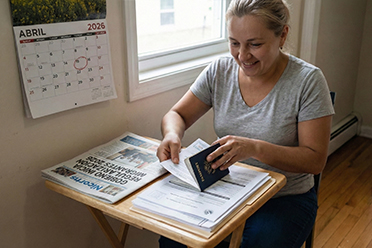
You have submitted your regularization application and want to know what is happening with it. You may still be waiting for a notification, have been asked for documents or have received a decision. We can look at your case file (expediente) and help you understand what the documents say and what your next step may be.
If your application is still pending
Keep your proof of submission and check how official notifications are being delivered. You can use the Spanish immigration case-status service, but an online status does not replace a notification. If the response is taking longer than you expected, we can review the submission date, the available status information and any communications you have received. A delay alone does not tell us what decision will be made.
If you receive a request for documents
A requerimiento de subsanación or a request for aportación de documentación tells you what the authorities need and when you must respond. Before uploading anything, check which case the request concerns and exactly what documents or explanations it asks for. If something is missing or needs clarification, we can review the notice and help prepare and submit a response within the stated deadline.
If you receive a decision
A favourable decision and a refusal (resolución denegatoria) lead to different next steps. If the decision is negative, we need to read the full notice, its reasons and its notification date before assessing the options. Depending on the case, we can consider an administrative appeal or proceedings before the Spanish administrative courts (recurso contencioso-administrativo). The appropriate route and deadline depend on the actual decision.
To get started, bring your submission receipt, any notifications and the documents filed with your application. Contact EXLEGEBCN if you would like us to review your situation.
This page concerns extraordinary regularization applications submitted by 30 June 2026. If you did not submit one, we can discuss other possible residence routes in light of your circumstances.
Legal review: Olga Gritchina Chernobilskaia, lawyer.